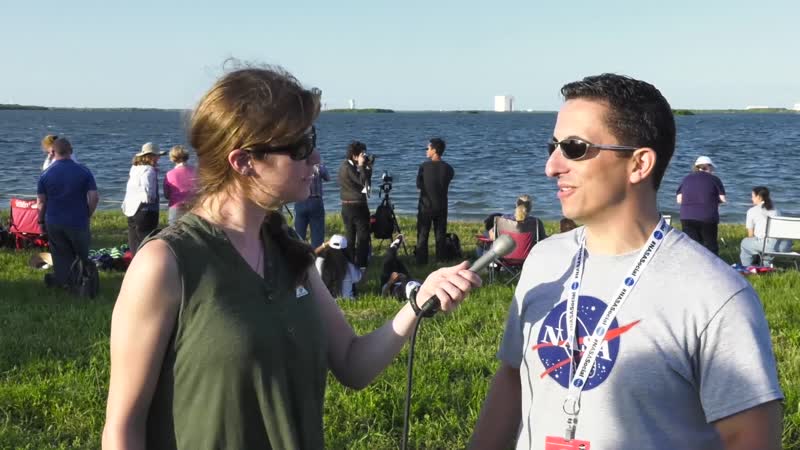
 ▶ Watch on Afoli
Watching the OSIRIS-REx launch
- Afoli Video
- 0 views
- Published 16 November 2026
- Duration: 6:35
Space and science: Watching the OSIRIS-REx launch. From the NASA Image and Video Library: a public-domain work of the US government.
0:00>>ERIN: Can you see my smile?! I feel like a little kid. I was
0:06just like grinning so wide I thought my face would crack.
0:12[logo musical sting] >>KATRINA: I’m Katrina Jackson from NASA’s
0:14Goddard Space Flight Center, and I’m here today at the Kennedy
0:16Space Center to watch the launch of our newest planetary science
0:19mission, OSIRIS-REx, which will study near-Earth asteroid Bennu
0:22and return a sample to Earth. The spacecraft is launching
0:25onboard an Atlas V rocket, and I know I’m excited to see my first
0:29rocket launch, so I’m curious to see how folks here are feeling
0:32about watching this new mission get off the ground. [drums,
0:36music] >>KATRINA: Jerushah, is this your first rocket launch?
0:42>>JERUSHAH: It is, and I’m very excited about it. >>ASHLEY: This
0:45is my first time here and my first launch. >>BRETT: It is my
0:48first time, launching a rocket. Well I’m not launching it, but
0:51other people are, but I’m watching it. >>ERIN: No, it’s
0:53actually my second, my first one was SpaceX CRS-7. >>JASON: No,
0:57this is actually the fourth rocket launch I’ve seen here.
1:01>>DANIEL: Actually I’ve been to several. I’ve been to probably
1:0325 different rocket launches, from Space Shuttle, to Deltas,
1:07SpaceX missions, so this is another one to add to the belt
1:12for me. >>KATRINA: And what makes you excited about watching
1:15a rocket launch? >>ASHLEY: What doesn’t make you excited about
1:17watching a rocket launch?! I hear that you’re going to feel
1:19the shockwaves and the soundwaves. >>ERIN: It’s just
1:22the feeling, right? Like seeing it, alright, there’s a small
1:24speck out there. And then being able to witness it is a very
1:27visceral event where you feel the ground shaking and you
1:30almost can taste it. I don’t know, it’s the most amazing
1:33thing I’ve ever seen. >>JASON: I love rockets. I love space
1:36exploration, I love what NASA’s doing, and of course there’s
1:39nothing more amazing than watching a rocket take off.
1:43>>JERUSHAH: I expect it to be a very emotional experience. You
1:45know to see a rocket actually go up into space to go to an
1:49asteroid, it’s the first time we’ve done this. So I expect it
1:52to be emotional and just awe-inspiring, you know as what
1:55we can do as human beings when we actually put our minds to it.
1:57>>DANIEL: Once you see it, it will live with you for the rest
2:00of your life. There’s no other way to say it. From hearing the
2:03sound, from feeling the power of the rockets, and just overall
2:06you really grasp what NASA is doing. By sending a rocket into
2:09space, I mean it literally is rocket science, they’re doing
2:12phenomenal things. >>KATRINA: Where did you get your suit
2:14here? >>ASHLEY: I got this at the Visitor Center gift shop.
2:17It’s awesome. >>KATRINA: Well I think I should get myself one of
2:19those, one of these days. >>ASHLEY: They come in blue too,
2:22but orange, gotta go with the orange. >>KATRINA: Why do you
2:24think this is so monumental for space exploration? >>BRETT:
2:27Well, there’s going to be a lot learned. I think when we can get
2:30material from an asteroid back on Earth and study it properly
2:34here on Earth, that’s going to be much more effective than
2:37sending a probe out there that has limited instruments and
2:39trying to study it out there. >>JERUSHAH: The fact that we are
2:42going to an asteroid for the first time and actually taking a
2:44sample and bringing it back home, you know, so that itself
2:47is just amazingly exciting, it’s what are we going to learn from
2:50this sample? >>YINAN: Asteroid Bennu is a carbonaceous
2:53asteroid, and so it could contain amino acids and organic
2:56compounds that we haven’t seen before based on other smaller
3:00pieces of meteorites. >>DANIEL: I mean we’re going to learn a
3:02lot about asteroids, where they come from, who we are. There are
3:05a lot of questions that are going to be answered, and I’m
3:08sure there’s going to be a lot of things that we’re still going
3:11to question after this. >>KATRINA: How has your
3:13experience at Kennedy been so far? >>YINAN: Fantastic. It’s
3:15like, NASA Social has given us such access to all the
3:18scientists, and even the administrator of NASA Charlie
3:21Bolden, so it’s amazing. >>DANIEL: It’s a phenomenal
3:25experience. I cannot say enough about NASA Social and what they
3:27have given us opportunities-wise. >>ASHLEY:
3:29I’ve really had a great time at NASA over the past couple of
3:31days. I’m an artist, so I’m definitely going to incorporate
3:35my experience here in some future work. >>KATRINA: Good
3:37luck with watching the launch, and maybe we’ll check back with
3:42you afterwards. >>LAUNCH COVERAGE VOICES: Status check.
3:46Go Atlas. Go Centaur. Go OSIRIS-REx. Everyone is go.
3:50Standing by for launch. Ten seconds. Nine. Eight. Seven.
3:56Six. Five. Four. Three. Two. One. And liftoff of OSIRIS-REx.
4:06Its seven year mission, to boldly go to the asteroid Bennu
4:15and back. >>ASHLEY: The rocket just like, you could see it
4:18lifting off and all the smoke, and then a couple seconds later
4:21you could hear the sound roll in toward you and it got louder and
4:25louder, it was awesome. >>ERIN: It’s like so bright. The
4:34brightness just gets me. There’s just no other white light like
4:37that. And the, like when the bass gets to you, when the sound
4:41rushes up, oh my god, I just want to cry, it’s just magical.
4:46I think everyone needs to see that to put a lot of things in
4:49perspective. [rocket sounds] >>LAUNCH VOICES: And the Atlas
5:04rocket carrying OSIRIS-REx has gone supersonic. Standing by to
5:08pass the max-Q [audience cheering] >>ASHLEY: Um, I was
5:14like really sweaty, and excited, and I’m not even on this
5:18mission, but I’m just so invested in it at this point. So
5:21like watching it go up I was just like “Ahh” and it makes you
5:23feel so small. >>ERIN: I feel like a little kid! I was just
5:30like grinning so wide I thought my face would crack. It’s
5:33amazing! I don’t know what to say! [audience cheering]
5:52[background launch voices] [drums, music] >>KATRINA: Now
5:52that OSIRIS-REx has safely made its way to space, I’m sure many
5:55of the team members are going to take a well-deserved rest
5:57tonight and settle in for the spacecraft’s two-year cruise to
6:00asteroid Bennu. Meanwhile, you can follow the mission’s
6:03online at nasa.gov/osiris-rex and on Twitter @OSIRISREx and
6:07with the hashtag #ToBennuAndBack. OSIRIS-REx will
6:12swing by Earth for a gravity assist next September, will
6:15reach Bennu in August 2018, will collect a sample in July of
6:192020, and will return to Earth in September of 2023, so it’s
6:21going to be a long and exciting ride, and we are excited to have
6:23all of you along for the journey. [satellite whooshes by,
6:27beeps] [sound fades out]
 Wood chopping1:42
 Testing the Dragonfly drone in the dunes2:25
 Sunset over Bangkok, timelapse4:53
 The Amazon canopy in laser data2:01
 A gas carrier transits Porpoise Bay2:40
 The Dog Factory (1904)4:29
 Hobby horse laughs6:41
 The rapids and falls of Ohiopyle2:56