0:00[adventurous music]
0:02>> Narrator: What's Up for July.
0:04This month, NASA is celebrating the 50th anniversary
0:07of the Apollo 11 mission.
0:09Making the first human landing on the Moon.
0:12While looking forward to the future of lunar exploration.
0:15So, this month, a special edition of What's Up.
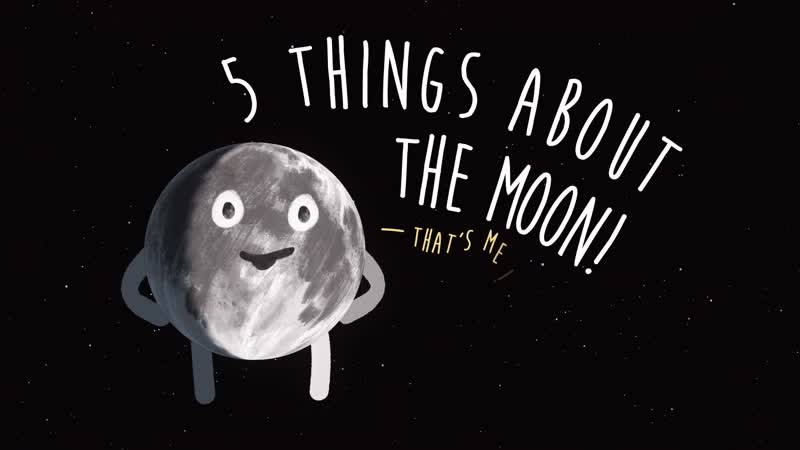
0:18Here are five things about the Moon
0:20that you can share with others
0:21when you're gazing up at our natural satellite.
0:24How far away is the Moon?
0:26The Moon is farther away from Earth
0:27than people often think.
0:29A good ballpark number to remember,
0:30is that the Moon is about a quarter of a million miles away.
0:34Or, about 400,000 kilometers.
0:37It's such a big gap,
0:39that you could just about fit the other seven
0:40major planets into the space between the two worlds.
0:44Astronauts from three of the Apollo missions,
0:46including Apollo 11,
0:48placed special reflectors on the lunar surface that are
0:50still used to determine the Moon's
0:52distance with extreme precision.
0:54In fact, they've revealed that the Moon is moving away
0:56from Earth by about an inch and a half per year.
0:59How big is the Moon?
1:01This one's another easy approximation to remember.
1:03The Moon is about one fourth the size of earth in diameter.
1:07It's about as wide as the United States.
1:11What color is the Moon?
1:13The Moon doesn't emit it's own light.
1:15It reflects light from the Sun.
1:17And, up close, the Moon's surface is mostly gray.
1:20Like old well-worn asphalt.
1:23Why do we always see the same side of the Moon?
1:25Now, it may not look like it,
1:27but the Moon really does rotate on it's axis.
1:29Much like Earth.
1:31We always see, essentially, the same face of the Moon,
1:33because it orbits around Earth in the same
1:35amount of time it takes to rotate.
1:37The reason is related to gravity,
1:39and the same forces that cause daily ocean tides.
1:42A side note, is that since it's rotating,
1:44there really is no permanent dark side of the Moon.
1:47The changing phases of the Moon demonstrate how the portion
1:50of it's surface that's lit by the Sun revolves
1:52around the Moon every month.
1:54Over the course of the lunar day.
1:57What are the dark areas on the Moon?
1:59One of the main things you notice when observing the Moon
2:01is that it has these bright and
2:03dark areas across it's surface.
2:05Everybody's familiar with the man in the Moon, right?
2:08The dark areas are known as Mare,
2:10the Latin word for seas.
2:13The lunar Mare are volcanic basins,
2:15created in the aftermath of ancient impacts,
2:18billions of years ago.
2:19After the impacts, the craters filled with lava.
2:22Which eventually cooled to form smooth dark plains.
2:26One of the most famous Mare,
2:27is the Sea of Tranquility.
2:29This was the landing site chosen for Apollo 11.
2:32In part, because it was fairly smooth and level.
2:36To locate the Sea of Tranquility,
2:37look for these two large dark markings that overlap.
2:41If you're facing South,
2:43they'll be on the Moon's right side.
2:44Tranquility is the lower of the two,
2:47and the Apollo 11 landing sight is right here.
2:5150 years on, NASA continues to reveal the Moon's secrets.
2:54With an eye toward sending the next human astronauts
2:56there in the near future.
2:58Here are the phases of the Moon for July.
3:04You can learn more about Apollo,
3:05and NASA's future plans for the Moon at nasa.gov.
3:09I'm Preston Dyches from NASA's Jet Propulsion Laboratory.
3:11And, that's What's Up for this month.
3:13[EXPLORE / NASA]
 ▶ Watch on Afoli
 Wood chopping1:42
 Testing the Dragonfly drone in the dunes2:25
 Sunset over Bangkok, timelapse4:53
 The Amazon canopy in laser data2:01
 A gas carrier transits Porpoise Bay2:40
 The Dog Factory (1904)4:29
 Hobby horse laughs6:41
 The rapids and falls of Ohiopyle2:56